
New Age music is all about creating calming and spacious soundscapes that help listeners relax, meditate, or simply vibe with a peaceful environment. For anyone dipping their toes into making or enjoying this style, knowing which kinds of instruments appear is really helpful. Here, I’ll walk through the types of instruments you’ll commonly hear in New Age music, share why they’re used, and point out the qualities that give them that truly soothing, dreamy feel. You’ll also stumble upon extra background, playing tips, and ideas for mixing up your own New Age palette.
What Makes an Instrument “New Age”?
There isn’t a strict checklist for what counts as a New Age instrument, but there are some clues. Mostly, it’s all about the vibe—the ability to create an atmosphere that feels light, open, and often just a bit mystical. Both acoustic and electronic sounds are fair game, with the main goal being to promote relaxation, reflection, or even inspiration.
In the early days, starting in the 1970s and ‘80s, New Age musicians pulled from everywhere. Western classical, Eastern, Native American, world folk music, and modern electronic traditions all mix together. This blend of influences is what gives New Age its distinctive variety and the sense of being something universal.
Overview of Core Instrument Types in New Age Music
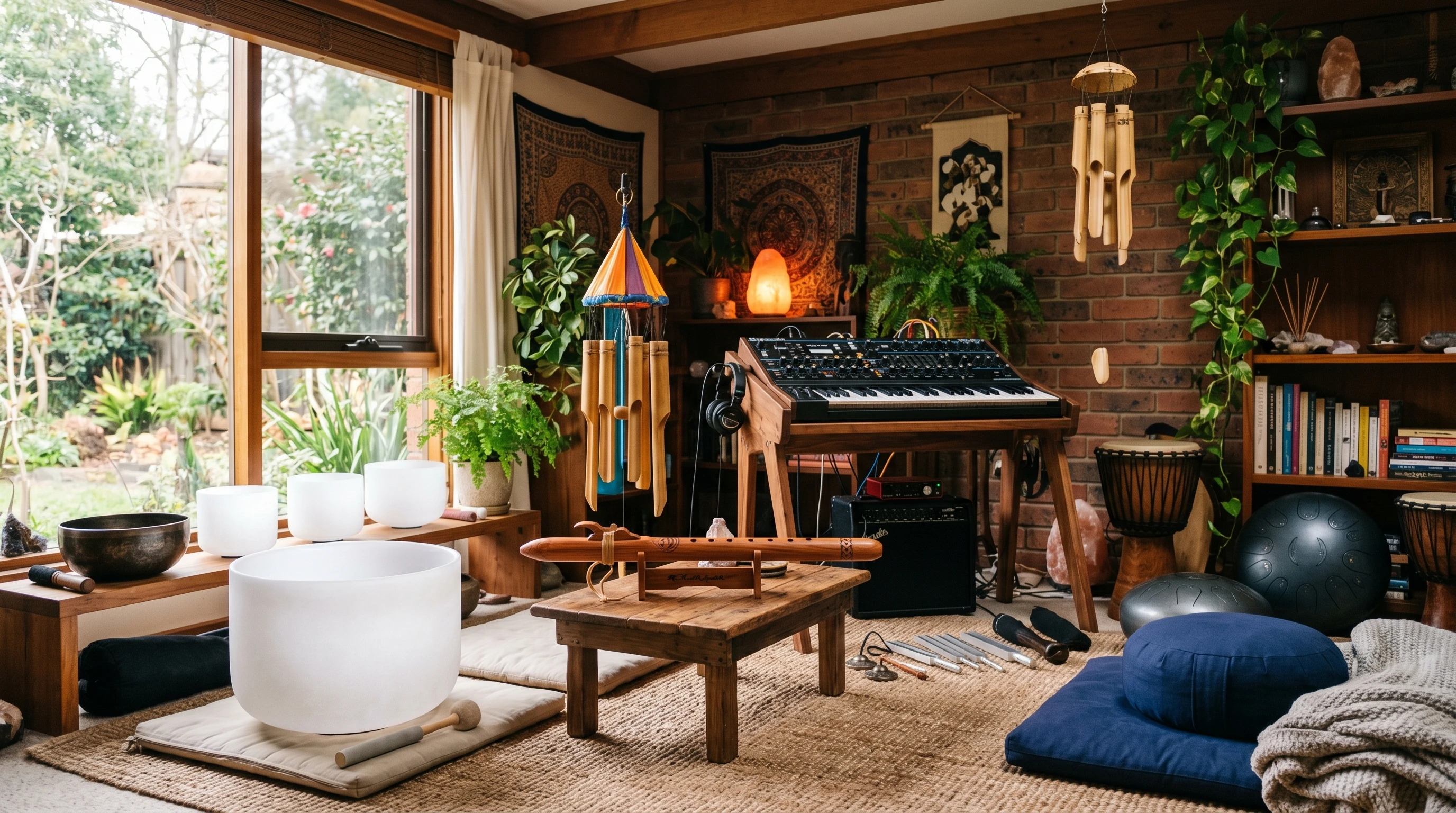
It’s a pretty big universe of instruments, but most fall into a few main categories:
- Keyboards and synthesizers for lush, flowing backdrops or subtle melody layers
- Acoustic and world instruments for natural, organic energy and warmth
- Percussion meant more for texture than strong rhythms
- Unusual and experimental sound sources like chimes, singing bowls, or even sampled nature sounds like flowing water or gentle birdsong
Popular Electronic Instruments in New Age
Electronic sounds are central to New Age music. If you’ve ever checked out artists like Enya, Deuter, or Yanni, you’ll notice plenty of these tools in play, giving the music that signature, ethereal character.
Synthesizers
The synthesizer is the hallmark of both classic and modern New Age music. It’s an incredibly versatile tool, capable of gentle pads, shimmering highs, and deep, meditative drones. Famous models from Roland and Korg, especially classic synths from their ‘80s and ‘90s lines, show up often in this genre.
Musicians use synths to layer smooth, airy chords that float on for ages. It’s impressive how quickly different patches can switch up the entire feel—moving from serene to something a bit more spacey and back again. Advanced New Age producers even experiment by tweaking envelope settings or adding subtle modulation for more movement within the sound.
Digital and Sampled Textures
Besides basic synth sounds, New Age composers often work in sampled textures. This might mean layering in sounds like wind, ocean waves, rainfall, or birdsong. These sonic touches fill out the mix and can instantly transport the listener into the natural world—even when everything is produced on a laptop or digital workstation. Sample packs or field recordings are a great resource for these ambiance-laden elements.
Electric Piano and Digital Pianos
Another electronic staple is the digital piano, including classics like the Yamaha DX7. These instruments have a glassy, bell-like resonance that fits right into the New Age palette. Often played with open, spacious chords or gentle melodies, they leave lots of room for other instruments and for reverb or echo effects, which give a sense of infinite space.
Key Acoustic Instruments in New Age
Every textured electronic soundscape benefits from a few natural, organic elements. Acoustic instruments bring warmth and a very real human touch. They connect listeners with something tangible, even if the larger sound world is pure fantasy.
Piano
The piano sits at the foundation of many ambient and New Age tracks. Its wide dynamic range supports soft, almost whispering notes or deep, rolling chords. When played slowly and with lots of space, a piano can carry an entire track, or fill in the background with little shimmers between other instruments. The tactile nature of real piano keys, combined with creative use of pedals, makes room for an expressive, soulful mood.
Acoustic and Classical Guitar
Both nylonstring classical guitars and steelstring acoustic guitars show up frequently in New Age recordings. Guitar parts are usually simplified: gentle arpeggios, flowing open chords, or easy melodic runs. Producers often make use of reverb and delay to let each note drift and linger, creating the sensation of the guitar being played in a vast, open space. Fingerstyle and light strumming techniques are common, adding an inviting, intimate feel.
Flutes and Wind Instruments
Flutes are classic relaxation instruments in New Age music. You’ll stumble upon Native American flutes, panpipes, bamboo flutes, and Japanese shakuhachi. Their breathy, organic tone feels instantly soothing and melodic. Flute phrases lean toward simplicity and spontaneity, embracing improvisation to evoke a free-spirited, meditative mood.
Harp
Harp stands out as a favorite for its sparkling, dreamlike quality. Whether played live or sampled, the instrument’s glissandos, rhythmic plucks, and cascading arpeggios bring calm and magic. Celtic, concert, and lap harps are all used depending on the desired character; harps often use open string tunings to keep the mood gentle and uplifting.
Percussion and Rhythmic Textures
Percussion in New Age music usually skips over driving beats, instead focusing on subtle pulses and resonant accents that offer structure without dominating the listening experience. These elements help keep the listener grounded without breaking the trance-like effect.
Hand Drums
Frame drums, djembes, and tablas are New Age favorites. They’re often played lightly, sometimes with bare hands or brushes, and used in moderation to keep the sound palette gentle. A quiet hand drum or tabla can give just enough movement to sustain interest across longer tracks.
Bells, Chimes, and Gongs
Metallic percussion—wind chimes, temple bells, gongs, or Tibetan tingshas—bring a magical sparkle to New Age music. Sometimes, bells simply mark transitions or serve as shimmering threads, anchoring meditation pieces. Chimes, especially, are often used at song openings or endings, brightening up the overall vibe.
Shakers and Soft Percussion
Egg shakers, ocean drums, and rainsticks provide gentle, rhythmic texture and add subtle movement. Ocean drums, mimicking the sound of surf, and rainsticks, with their soft cascading noise, set a scene without ever getting aggressive. It’s about supporting the overall environment rather than grabbing attention.
Specialty Instruments Unique to New Age
Singing Bowls
Crystal singing bowls and Tibetan singing bowls stand out as the ultimate relaxation instruments. Whether struck or played with a mallet, their pure, resonant tones envelop a room. Artists use them for individual notes, sustained backgrounds, or even as drone bases for entire songs. Their natural harmonics add layers of sonic richness.
Didgeridoo
The didgeridoo, originally from Australian Aboriginal culture, brings a deep, earthy drone to meditation and sound healing music. Its steady sound pairs nicely with soft pads or bell tones, grounding the listener and supporting mindfulness and stress relief. Many New Age composers love its primal, grounding energy.
Kalimba and Other Thumb Pianos
Kalimbas and similar thumb pianos offer a delicate, plucked sound that fits perfectly within the New Age genre. Their small size and mellow, sweet tone make them ideal for peaceful, playful melodies. Layered with synths or harp, the kalimba’s rhythmic patterns bring fresh energy without overwhelming the mix.
Nature Sounds and Ambient Additions
What truly stands out in New Age is the use of field recordings and ambient sounds. Rainfall, babbling brooks, gentle winds, whale songs, and distant thunder all make appearances. Whether sampled or played in real time behind the main instruments, these soundscapes step up the meditative, peaceful mood and blur the line between human performance and the natural world. Some artists even record their own environmental sounds to personalize their works further.
What to Think About When Choosing New Age Instruments
If you’re thinking of getting into New Age music, here are some starter ideas for assembling your tool kit and finding your own vibe:
- Listen to a range of artists. Pay close attention to the instruments they use and how you feel when you listen to those sounds.
- Don’t overlook software instruments. Plenty of synth plugins and sample packs offer endless, lush sounds—great for those without physical gear or starting out in a home studio.
- Balance organic and electronic elements. Mixing the two gives you more depth and warmth while keeping your music feeling both modern and earthy.
- Simplicity wins. Slow, open playing styles and lots of space almost always deliver a more immersive experience than technical complexity.
- Experiment with room sound. Try layering in reverb and delay effects to drop your instruments into a wide, dreamy sonic landscape.
Answering Common Questions About New Age Instruments
People who are new to this musical style usually wonder about a few things:
What’s the single most popular instrument in New Age music?
Answer: Synthesizers stand out the most, mostly due to their sheer adaptability. Still, acoustic guitar, piano, and flutes also claim huge popularity and play standout roles.
Do I need exotic instruments to make New Age music?
Answer: Not at all. You can use whatever’s handy—many New Age tracks use basic piano, guitar, or virtual synths. Simple adjustments, like adding natural sound effects or room reverb, can give your sound a “New Age” feel without buying rare gear or instruments.
Can I use electronic and acoustic instruments together?
Answer: Absolutely; in fact, this blend is the secret sauce in much of New Age music. Mixing airy synth pads with live acoustic playing levels up the depth and character that listeners come back for.
More Tips for Crafting Your Own New Age Sound
- Layer sounds purposely. Begin with a rich synth pad, add a soft piano melody, and then sprinkle in a gentle bell, flute, or even simple nature effects.
- Leave space in your mix. Room for the music to “breathe”—let lingering notes, echoes, and the natural “air” between sounds do their magic.
- Think about mood and intention. Whether you want to energize, soothe, or inspire, keep that goal in mind. Let it shape your instrument choices and your playing style for each track.
Jumping into New Age instruments opens up all kinds of creative avenues. There’s no single right way or set combination; it’s all about personal taste, experimentation, and emotion. By understanding what’s out there, you get to build and share your own peaceful atmosphere, helping anyone who needs a bit of calm or inspiration.